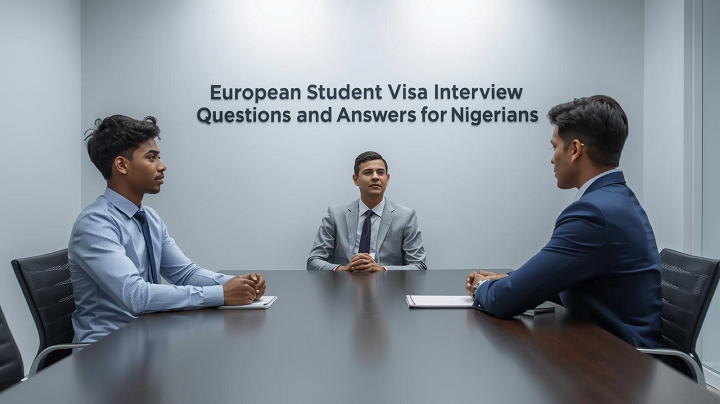
European Student Visa Interview Questions and Answers for Nigerians
Introduction
For Nigerian applicants, the European student visa interview is often the most decisive stage of the entire study-abroad process. While documents establish eligibility on paper, the interview determines credibility in practice. European embassies increasingly rely on interviews to assess whether Nigerian applicants are genuine students or high-risk overstayers.
In 2026, interview standards are stricter than in previous years. Visa officers are trained to identify inconsistencies, rehearsed answers, financial weaknesses, and migration intent signals. Many Nigerian refusals occur not because applicants lack documents, but because they fail to communicate a coherent and believable academic story.
This guide explains the most common European student visa interview questions, why they are asked, what visa officers are really testing, and how Nigerians should answer professionally and convincingly.
How European Visa Officers Think During Interviews
Understanding the mindset of the visa officer is more important than memorising answers.
Visa officers are not there to encourage or discourage you. Their responsibility is to assess risk. Every question is designed to test one or more of the following:
-
Genuineness of study intent
-
Academic logic and progression
-
Financial sustainability
-
Likelihood of compliance with visa conditions
-
Risk of illegal work or overstaying
For Nigerians, interviews are often shorter but more direct. Officers expect clarity, honesty, and confidence without exaggeration.
General Interview Behaviour Expectations
Before discussing specific questions, Nigerians must understand behavioural expectations.
Applicants are expected to:
-
Speak calmly and clearly
-
Answer questions directly
-
Avoid unnecessary explanations
-
Maintain consistency with submitted documents
-
Demonstrate basic knowledge of their course and country of study
Overconfidence, defensiveness, or nervous over-talking can work against the applicant.
Question Category 1: Study Motivation and Academic Intent
These questions are usually asked first because they establish the foundation of the application.
Common Question:
Why do you want to study in Europe?
What the Officer Is Testing:
The officer wants to know whether Europe was chosen deliberately for academic reasons or merely as an immigration route.
Strong Nigerian Answer (Conceptual Structure):
A good answer explains academic quality, program relevance, and personal development without comparing Europe negatively against Nigeria.
Applicants should focus on:
-
Quality of education
-
Curriculum relevance
-
Research or practical exposure
-
International recognition
Avoid statements suggesting Europe was chosen because it is easier to migrate or cheaper to survive.
Common Question:
Why did you choose this particular country?
What the Officer Is Testing:
Country-specific knowledge and intentionality.
Strong Nigerian Answer:
The answer should show awareness of:
-
Education system strengths
-
Language of instruction
-
Academic reputation
-
Industry relevance to the course
Generic answers that could apply to any European country are weak.
Common Question:
Why did you choose this university?
What the Officer Is Testing:
Whether the applicant researched the institution or applied randomly.
Strong Nigerian Answer:
A good response mentions:
-
Program structure
-
Specialisation options
-
Practical training or internships
-
Academic ranking within the country
Applicants should avoid praising the university excessively or sounding promotional.
European Student Visa Interview Questions and Answers for Nigerians
Question Category 2: Course Choice and Academic Background
This category is critical for Nigerians, as many refusals occur due to poor academic alignment.
Common Question:
Why did you choose this course?
What the Officer Is Testing:
Academic coherence and career planning.
Strong Nigerian Answer:
The answer should logically connect:
-
Previous education
-
Current skills or experience
-
Future career goals
Sudden course changes without explanation are a major red flag.
Common Question:
How does this course relate to what you studied before?
What the Officer Is Testing:
Progression rather than academic backtracking.
Strong Nigerian Answer:
Applicants should explain progression clearly. Even when changing fields, the explanation must show skill transfer or strategic repositioning.
Unexplained academic jumps often lead to refusal.
Question Category 3: Financial Capability Questions
Financial questions are among the most sensitive for Nigerian applicants.
Common Question:
Who is sponsoring your studies?
What the Officer Is Testing:
Financial credibility and independence.
Strong Nigerian Answer:
Applicants must answer exactly as stated in their documents. Sponsors should be clearly identified, with relationship and income sources consistent.
Contradictions between oral answers and documents almost always result in refusal.
Common Question:
How much is your tuition fee and living cost per year?
What the Officer Is Testing:
Financial awareness and preparedness.
Strong Nigerian Answer:
Applicants must know approximate figures in Euros and show confidence. Not knowing costs suggests poor planning.
Guessing or understating figures is risky.
Common Question:
What does your sponsor do for a living?
What the Officer Is Testing:
Sustainability of funding.
Strong Nigerian Answer:
The answer should be specific, realistic, and supported by documents. Vague descriptions such as “businessman” without clarity raise suspicion.
Question Category 4: Post-Study Plans and Intent
This is one of the most decisive areas for Nigerians.
Common Question:
What are your plans after graduation?
What the Officer Is Testing:
Risk of overstaying or illegal work.
Strong Nigerian Answer:
Applicants should show openness to lawful options without declaring illegal intent.
Balanced answers include:
-
Returning to Nigeria to apply skills
-
Exploring legal post-study work options where available
-
Career development plans tied to education
Declaring permanent migration intent without legal framework is dangerous.
Common Question:
Do you plan to stay in Europe permanently?
What the Officer Is Testing:
Compliance risk.
Strong Nigerian Answer:
Applicants should emphasise compliance with visa laws and openness to lawful pathways without sounding desperate to stay.
Question Category 5: Work During Studies
Common Question:
Do you plan to work while studying?
What the Officer Is Testing:
Financial realism and compliance.
Strong Nigerian Answer:
Applicants should acknowledge legal student work limits but clearly state that studies are the priority and funding does not depend on work income.
Saying you will work to pay tuition is a refusal trigger.
Common Interview Mistakes Nigerians Must Avoid
Many refusals stem from behaviour rather than documents.
Common mistakes include:
-
Memorised answers
-
Over-explaining
-
Contradicting documents
-
Showing desperation
-
Appearing uninformed
Embassy officers are trained to detect coached responses.
Professional Insight for Nigerians
The European student visa interview is not an exam. It is a credibility assessment. Nigerians who approach it with honesty, preparation, and composure perform significantly better than those who memorise scripts.
Every answer should reinforce one message: I am a genuine student with a clear plan and sufficient resources.
European Student Visa Interview Questions and Answers for Nigerians
Country-Specific Interview Variations Nigerians Must Understand
Although European student visa interviews share common principles, individual countries apply different levels of scrutiny and questioning styles. Nigerians often fail interviews because they prepare generically rather than tailoring their mindset to the country involved.
Some countries focus heavily on financial structure and traceability. Others concentrate on academic progression and language ability. A few pay particular attention to long-term settlement risk.
Nigerian applicants must understand that the tone of the interview may range from conversational to highly direct. A strict tone does not mean rejection is imminent; it reflects the officer’s responsibility to manage risk.
High-Risk Questions Nigerians Fear Most
Certain questions consistently unsettle Nigerian applicants. These questions are designed to test honesty under pressure rather than to trap the applicant.
Question:
Why didn’t you study this course in Nigeria?
What the Officer Is Testing:
Respect for the home country’s education system and genuine need to study abroad.
Professional Nigerian Response Framework:
The answer should acknowledge Nigerian institutions positively while explaining specific academic, research, or exposure gaps that the European program fills. Disparaging Nigerian education is a serious mistake.
Question:
Why are your grades low in some subjects?
What the Officer Is Testing:
Self-awareness, honesty, and academic maturity.
Professional Nigerian Response Framework:
Applicants should take responsibility, explain context briefly, and emphasise improvement. Blaming lecturers or institutions signals immaturity.
Question:
Why is your sponsor funding you instead of you funding yourself?
What the Officer Is Testing:
Financial independence and risk of future dependency.
Professional Nigerian Response Framework:
Applicants should clearly explain family or sponsorship structures common in Nigeria, backed by documents, without appearing financially helpless.
Refusal-Trigger Answers and How to Reframe Them
Many Nigerian refusals occur not because the intention is wrong, but because the wording is careless.
Saying you chose Europe because it is “cheap” suggests financial vulnerability. A better framing is affordability combined with quality and value.
Saying you want to “work and settle” suggests migration intent. A safer framing emphasises legal opportunities and compliance.
Saying you do not know your sponsor’s income suggests financial risk. Applicants must understand their funding structure.
Embassy interviews reward precision, not exaggeration.
Interview Questions on Immigration History
Common Question:
Have you ever applied for a visa before?
What the Officer Is Testing:
Transparency and risk profiling.
Professional Nigerian Response Framework:
Applicants must answer honestly. Previous refusals should be acknowledged calmly, with lessons learned and improvements made. Concealment is worse than refusal history.
Common Question:
Do you have relatives in Europe?
What the Officer Is Testing:
Settlement risk.
Professional Nigerian Response Framework:
Applicants should answer truthfully and clarify that family presence does not influence study intent or compliance with visa conditions.
Psychological Control and Composure During Interviews
European visa interviews for Nigerians are often brief. Officers form impressions quickly.
Applicants should maintain:
-
Neutral facial expressions
-
Calm posture
-
Measured tone
-
Direct eye contact where culturally appropriate
Over-defensiveness suggests insecurity. Over-friendliness may appear unserious.
Silence after answering is acceptable. Do not rush to fill it.
Real Nigerian Interview Case Scenarios
Successful Nigerian applicants often display clarity rather than brilliance. They know their program, understand their finances, and explain their goals without drama.
Unsuccessful applicants often:
-
Argue with officers
-
Contradict documents
-
Overemphasise hardship
-
Appear unaware of basic details
The difference is preparation and mindset, not intelligence.
European Student Visa Interview Questions and Answers for Nigerians
Final Embassy-Ready Answer Framework
Strong Nigerian answers usually follow this structure:
-
Direct response to the question
-
One brief supporting explanation
-
Alignment with submitted documents
-
Calm conclusion
Long narratives are rarely necessary.
Last-Minute Preparation Checklist
Before attending the interview, Nigerian applicants should:
-
Review all submitted documents
-
Know tuition and living costs in Euros
-
Understand course structure
-
Prepare honest explanations for weaknesses
-
Practise calm delivery, not memorised scripts
Confidence comes from understanding, not memorisation.
Expert Final Conclusion
European student visa interviews in 2026 remain challenging for Nigerians, but they are not designed to be unfair. They are designed to separate genuine students from high-risk applicants.
Nigerians who understand the logic behind questions, communicate honestly, and present coherent academic and financial plans consistently outperform those who rely on rehearsed answers or agents.
The interview is not about perfection. It is about credibility.