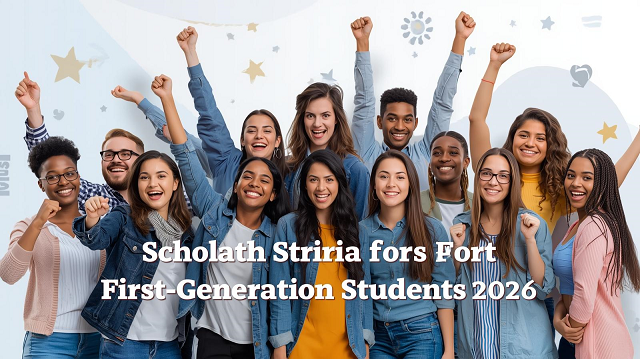
Scholarships for First-Generation Students 2026
In 2026, the term “first-generation student” continues to gain global recognition, especially across Africa, where many young people come from families without any prior history of university or tertiary education. A first-generation student is someone whose parents or guardians did not complete a college degree. This includes individuals raised by relatives, foster families, or single parents who never attended higher education institutions.
In practical terms, a Nigerian or African student who is the first in their family to attend a university, polytechnic, or college of education qualifies as first-generation. This category is important because it highlights students who often face financial barriers, lack structured academic guidance, and need additional support to navigate higher education systems.
Funding is one of the biggest barriers for many of these students. That is why a growing number of scholarship bodies, universities, governments, and international organizations have developed targeted financial opportunities specifically for first-generation applicants. The year 2026 is projected to record even more openings as institutions increase their diversity and inclusion commitments.
Understanding this category helps applicants provide accurate information, prepare the right documents, and position themselves strongly for available opportunities.
Why First-Generation Scholarships Matter in 2026
Scholarships for first-generation students are becoming more necessary due to widening educational gaps in many countries. In nations across Africa, including Nigeria, Ghana, Kenya, and South Africa, rising tuition fees and economic instability make it difficult for many families to sponsor higher education. Several factors explain the importance of first-generation scholarships in 2026:
Increased Financial Pressure
The cost of textbooks, tuition, accommodation, transportation, and research materials has grown significantly. For students whose parents never attained higher education, financial literacy and income capacity may be limited. Scholarships help to bridge this affordability gap.
Supporting Social Mobility
Higher education remains one of the most effective tools for upward mobility. Many governments and institutions understand that empowering first-generation students contributes directly to national development, talent growth, and poverty reduction.
Expanding Global Inclusion Policies
International universities are strengthening diversity, equity, and inclusion strategies. Part of this involves offering scholarships to students who come from historically underrepresented backgrounds, including first-generation students.
Increasing Demand From African Students
African students are applying for scholarships at unprecedented levels. Many of them are first-generation, motivated by the hope of securing better global opportunities. Institutions are responding by expanding scholarship categories to accommodate this demand.
Because of these factors, 2026 is projected to be one of the most opportunity-rich years for students who fall into this category.
Types of First-Generation Scholarships Available in 2026
Scholarships for first-generation students vary depending on the institution, funding body, level of study, and country. Understanding the categories helps applicants determine where they best qualify and how to prepare.
Merit-Based First-Generation Scholarships
These are awarded to students with outstanding academic performance. Even though the scholarships target first-generation students, applicants must still meet specific grade requirements. Many top universities use this format because they want to attract high-achieving students who also come from educationally disadvantaged backgrounds.
Scholarships for First-Generation Students 2026
Need-Based First-Generation Scholarships
These are for applicants who demonstrate financial need. Many African and international organizations prefer this format because it prioritizes students who genuinely require funding to access higher education.
Program-Specific Scholarships
Some scholarships focus on particular fields such as engineering, health sciences, agriculture, business, technology, or education. These programs support students from families with no educational background but who want to pursue fields that contribute to national development.
Government-Sponsored Opportunities
Several countries run scholarship programs through ministries of education, diaspora offices, innovation agencies, or international partnerships. Many governments include special allocations for first-generation applicants as part of their equity initiatives.
University-Funded First-Generation Scholarships
Most universities now provide internal scholarships specifically for those who are the first in their family to attend higher education. These may cover partial or full tuition, housing, or living expenses.
NGO and Foundation Scholarships
Non-profits, development agencies, and philanthropic foundations in 2026 continue expanding first-generation scholarship programs. Many are tailored to regions like West Africa, East Africa, Southern Africa, or specific countries such as Nigeria or Kenya.
International First-Generation Opportunities
Universities abroad, especially in the United States, Canada, the United Kingdom, Australia, and parts of Europe, offer first-generation scholarships to foreign students, including Africans. These programs focus on diversity and global representation.
Understanding these categories helps applicants position themselves strategically when searching for opportunities.
Key Eligibility Requirements for First-Generation Scholarships
Although each scholarship has its own criteria, most opportunities for first-generation students share general eligibility requirements. As a 2026 applicant, expect the following:
You Must Be the First in Your Family to Attend University
Most organizations define first-generation status as having parents or guardians who never completed a university degree. Some require a signed declaration form or proof through parental educational background.
Academic Requirements
Depending on the scholarship category, you may need to meet certain academic thresholds. Examples include:
-
Minimum high school grade requirements
-
Minimum CGPA for university students
-
Passes in core subjects related to your field
-
Evidence of academic achievement such as awards or transcripts
Age Limitations
Some scholarships set age restrictions, especially undergraduate programs. For example, an undergraduate scholarship may target students aged 17 to 25. Postgraduate programs usually allow older applicants.
Citizenship or Residency Requirements
Scholarships may require applicants to be citizens of a specific country or residents of a particular region. Nigerian students applying for international scholarships must usually show their Nigerian citizenship through a passport or national ID.
Proof of Financial Need
For need-based opportunities, applicants may need to provide:
-
Family income statements
-
Letters proving economic difficulty
-
Documentation showing parents’ employment status
-
Explanation of family circumstances
Leadership or Community Service
Many first-generation scholarships favor applicants who show commitment to leadership, volunteerism, or community development.
Field of Study Relevance
Program-specific scholarships require applicants to be enrolled in or planning to study certain courses such as engineering, public health, or business administration.
Admission Status
Some scholarships require proof of admission into a recognized institution before applying. Others allow students to apply before receiving admission, especially for international programs.
Meeting the eligibility criteria increases your chances significantly and helps tailor your application documents correctly.
Documents Commonly Required for First-Generation Scholarships
Preparing accurate and complete documentation is crucial for 2026 scholarship applications. Missing or poorly prepared documents is one of the most common reasons students lose opportunities.
Here are the documents typically required:
Academic Transcripts
This includes your secondary school results, WAEC/NECO certificates, university transcripts (for postgraduate applicants), or equivalent academic records.
Personal Statement or Essay
Most scholarships require a detailed personal statement explaining:
-
Your background as a first-generation student
-
Educational challenges you have faced
-
Your academic and career goals
-
Why you deserve the scholarship
-
How the opportunity will impact your life and community
Proof of First-Generation Status
Scholarships may require a signed declaration indicating that neither of your parents holds a university degree. In some cases, a guidance counselor or community leader must verify the information.
Financial Evidence
Tax forms, income statements, employer letters, or documentation demonstrating financial hardship may be requested.
Reference Letters
Strong recommendation letters from teachers, professors, employers, or community leaders strengthen your application.
Admission Letter
For scholarships tied to specific institutions, you may need to provide an admission letter or proof that you have applied.
Curriculum Vitae
A clear and well-structured CV helps highlight your achievements, leadership experience, and academic progress.
Passport or Identification
This could be a national ID, passport, birth certificate, or any recognized identity document.
Having these documents ready early helps you apply quickly once opportunities open.
Scholarships for First-Generation Students 2026
How to Find First-Generation Scholarships in 2026
Knowing where to search is one of the biggest challenges for first-generation students. Many students rely only on word of mouth, missing out on numerous opportunities.
Here are practical strategies for discovering scholarships:
University Financial Aid Offices
Most institutions publish annual scholarship lists specifically for first-generation students. These lists include deadlines, requirements, and application procedures.
Government Scholarship Boards
Ministries of education and related government agencies publish yearly scholarship announcements. Many of these include allocations for underrepresented groups.
Embassy and Consular Announcements
For international opportunities, embassies often share scholarship updates for study abroad programs.
Non-Profit and Community Organizations
Foundations supporting education, youth empowerment, and social development frequently publish scholarship updates.
Student Networks
Student associations, alumni groups, and academic clubs often circulate scholarship information. Being part of these networks gives you early access to opportunities.
Academic Conferences and Career Fairs
Universities and organizations host events that introduce students to available scholarships. Many of these events help applicants learn directly from scholarship officers.
A combination of these strategies significantly increases your chances of discovering the right opportunities early.
Common Challenges First-Generation Students Face When Applying for Scholarships
Students who are the first in their families to attend higher education often face several challenges that can affect their scholarship application journey. Understanding these challenges helps you prepare effectively.
Limited Access to Guidance
Since no one in the family has gone through university, applicants may lack mentors or experienced individuals who can guide them through admission and scholarship processes.
Financial Constraints
Processing documents, paying for application fees, or funding standardized tests can become barriers.
Lack of Confidence
Some first-generation students underestimate their abilities because they come from families without educational backgrounds. This affects the quality of their applications.
Poor Documentation
Inadequate record-keeping is common, leading to missing certificates, incomplete transcripts, or poorly written essays.
Deadlines
Applicants may miss deadlines due to limited access to information or late preparation.
Competition
First-generation scholarship categories attract many applicants, especially from regions like Africa where demand is high.
Understanding these challenges is the first step toward overcoming them and submitting a strong application.
Scholarships for First-Generation Students 2026
Detailed List of Scholarships for First-Generation Students in 2026
The landscape of scholarships for first-generation students in 2026 is broad and expands across countries, institutions, and disciplines. Although availability varies, the categories below represent common opportunities that first-generation students—especially Nigerians and Africans—can access.
University-Based First-Generation Scholarships
Many universities worldwide have committed to increasing first-generation enrollment. These institutions design internal scholarship packages specifically for students entering university for the first time in their family.
Examples of what universities typically offer include:
Full Tuition Waivers
These programs cover full tuition for undergraduate students who demonstrate exceptional academic potential and financial need. Universities in North America, Europe, and Asia increasingly allocate slots for international first-generation students.
Partial Scholarships
Some universities provide partial tuition reductions for students from low-income families. These partial waivers are ideal for applicants who can manage accommodation and living expenses but need support for academic fees.
Equity and Inclusion Grants
In 2026, many universities are expanding equity grants to support underrepresented groups. First-generation students qualify automatically, and the grants may cover books, research tools, housing, or orientation programs.
Freshman Support Scholarships
These target students entering their first year of undergraduate study. They help ease first-year expenses and help first-generation students adjust to campus life.
Government Scholarships for First-Generation Applicants
Many governments run annual scholarship programs that prioritize or include first-generation applicants as part of their educational inclusion agenda.
These may include:
National Merit-Based Scholarships
Governments award these based on outstanding performance in national examinations. First-generation students from low-income backgrounds often gain additional priority points.
Community-Based Scholarships
Some local or provincial governments offer funding to support marginalized groups—often including first-generation applicants—to pursue higher education.
International Study Abroad Scholarships
Many African governments partner with foreign universities to send students abroad for undergraduate and postgraduate programs. First-generation students with strong academic results are often encouraged to apply for these.
NGO and Foundation Scholarships for First-Generation Students
Foundations and non-profits across Africa and globally commit funds to support first-generation students.
These may include:
Youth Empowerment Foundations
Organizations dedicated to youth development often provide scholarships for first-generation students, especially those studying fields that benefit their community.
Women-Focused Scholarships
First-generation women frequently receive extra support due to gender-based barriers. Many foundations offer STEM, business, and health-related scholarships exclusively for first-generation young women.
Development-Focused Scholarships
Many NGOs provide funding for fields like agriculture, education, public health, climate change, engineering, and social development.
International University Scholarships for African First-Generation Students
Universities abroad offer several opportunities specifically accessible to Nigerian and African applicants.
These include:
Need-Based International Scholarships
These are common in North American and European universities, providing grants or full funding for first-generation students from financially challenged backgrounds.
Diversity and Inclusion Scholarships
International institutions highlight diversity in their admission policies and support first-generation applicants to improve campus representation.
Global Talent Scholarships
Designed for high-achieving applicants, these scholarships target students who show academic excellence and leadership potential, regardless of their family’s educational background.
Program-Specific Scholarship Opportunities
Some scholarships focus on particular fields of study. These are particularly valuable for first-generation applicants who choose high-demand courses.
Examples include:
STEM Scholarships
Designed for engineering, mathematics, computer science, biotechnology, or data science students. These scholarships aim to fill global shortages in technical fields.
Health and Medical Scholarships
For nursing, medicine, public health, pharmacy, laboratory science, and related areas. Many programs sponsor first-generation students who come from communities lacking access to healthcare.
Business and Entrepreneurship Funding
First-generation business students often benefit from scholarships targeted at leadership, management, innovation, and entrepreneurship.
Education and Social Science Scholarships
These programs sponsor first-generation applicants who plan to work in community development, teaching, and public administration.
By focusing on the appropriate scholarship category, students can significantly increase their chances of success.
How to Write a Winning First-Generation Scholarship Essay
Your scholarship essay is a critical part of your application. For first-generation students, this is your opportunity to tell your story, explain your challenges, and demonstrate your potential.
Here is a structured approach:
Scholarships for First-Generation Students 2026
Start With Your Background Story
Explain your family history, emphasizing that you are the first person pursuing higher education. Provide clear context, such as:
-
Parents’ occupations
-
Community or environment you grew up in
-
Educational barriers you experienced
-
Why you want to break the cycle
Highlight Your Academic Achievements
Even if your grades are not perfect, explain your progress, consistency, and any recognition you have earned. Emphasize self-discipline and dedication.
Discuss Financial Need (If Applicable)
If the scholarship is need-based, explain your family’s financial situation. Be honest, clear, and respectful—avoid exaggerations.
Explain Your Motivation and Goals
Describe what you want to study and why. Scholarship committees value purpose-driven applicants.
Connect Your Story to Community Impact
Explain how your education will contribute to your community, nation, or Africa at large.
Demonstrate Leadership and Initiative
Mention volunteer work, responsibilities at home, school leadership roles, or participation in community activities.
Close With Confidence
End with a strong conclusion that reaffirms your commitment and states why you deserve the scholarship.
A compelling essay can transform your application from ordinary to outstanding.
Step-by-Step Guide to Applying for First-Generation Scholarships in 2026
Many applicants lose opportunities because they do not follow a proper application structure. Below is a detailed guide to help first-generation students navigate the process smoothly.
Step 1: Identify Eligible Scholarships
Start by determining which scholarships you qualify for based on:
-
Academic level
-
Country restrictions
-
Field of study
-
Financial need
-
First-generation status
Step 2: Prepare Your Documents
Gather all necessary materials early. This includes transcripts, essays, letters of recommendation, CV, and identification.
Step 3: Verify Application Deadlines
Many scholarship bodies operate strict deadlines. Create a personal calendar to track:
-
Opening dates
-
Deadline dates
-
Interview windows
-
Supplementary document deadlines
Step 4: Write a Strong Personal Statement
Use the guidelines above to craft a deep, compelling, and error-free essay.
Step 5: Request Recommendation Letters Early
Give your referees enough time to prepare well-written letters. Provide them with your CV and details of the scholarship.
Step 6: Submit an Accurate Online or Offline Application
Ensure all fields are completed. Double-check names, dates, and uploaded documents.
Step 7: Prepare for Interviews (If Required)
Some scholarships require interviews. Prepare by:
-
Reviewing your application
-
Understanding your field of study
-
Practicing common interview questions
-
Demonstrating confidence and clarity
Step 8: Follow Up
Some programs allow applicants to track their application progress. Keep an eye on updates and email notifications.
Following these steps increases your chances of being selected.
Scholarships for First-Generation Students 2026
Common Mistakes First-Generation Students Must Avoid
Mistakes can cost you opportunities even when you are highly qualified. Here are common errors and how to avoid them:
Missing Deadlines
Many applicants discover scholarships too late. Start searching early and organize important dates.
Submitting Incomplete Documents
Always check the required documents list. Missing a single document can lead to disqualification.
Weak Personal Statements
Generic or poorly written essays do not stand out. Use personal experiences, goals, and community impact to create a strong narrative.
Not Tailoring Applications
Sending the same essay or CV to every scholarship reduces your chances. Customize each application.
Poor Communication Skills
Some applicants ignore emails or fail to check regularly. Maintain professional communication throughout the process.
Lack of Proofreading
Grammatical errors, spelling mistakes, or unclear statements reduce the quality of your application.
Avoiding these mistakes helps create a polished and professional submission.
Expert Tips to Increase Your Chances of Winning Scholarships
As a career and education expert, here are practical strategies to help first-generation students succeed:
Start Applications Early
Most successful applicants begin preparing months before deadlines.
Build Experience
Even small leadership or volunteer activities create strong CV content.
Keep Multiple Essay Drafts
Refine your personal statement through several versions.
Use Clear and Professional Language
Your tone should reflect maturity, purpose, and dedication.
Take Advantage of Free Resources
Many institutions provide free academic advising, writing assistance, and counseling.
Prepare for Standardized Tests Early
If the scholarship requires tests such as English proficiency exams, prepare and register early.
Apply to Multiple Scholarships
Increase your chances by applying widely. Many students win multiple awards.
Scholarships for First-Generation Students 2026
Case Scenarios for First-Generation Students Seeking Scholarships
To guide students more practically, here are real scenarios similar to what many Nigerian and African first-generation applicants experience:
Case Scenario 1: Undergraduate Applicant from a Low-Income Family
A student from a rural area in Nigeria wants to study civil engineering. Their parents never attended university, and the family struggles financially.
The student can target:
-
Need-based scholarships
-
STEM-specific first-generation scholarships
-
University-funded engineering scholarships
-
Community development scholarship programs
Case Scenario 2: First-Generation Applicant Seeking International Study
A first-generation Ghanaian applicant wants to pursue postgraduate studies abroad. They have strong academic results but low financial support.
They can apply for:
-
Diversity and inclusion scholarships
-
Need-based international scholarships
-
Government-funded postgraduate programs
-
University-based first-generation awards
Case Scenario 3: First-Generation Woman in STEM
A young woman in Kenya wants to study computer science. She qualifies as a first-generation candidate and has excellent grades.
She can benefit from:
-
Women-focused technology scholarships
-
STEM scholarships for first-generation students
-
University-based tech awards
-
NGO empowerment programs for girls in technology
These scenarios illustrate how different conditions and backgrounds influence scholarship opportunities.
Long-Term Benefits of First-Generation Scholarships
Securing a scholarship in 2026 offers long-lasting benefits beyond financial support.
These include:
Academic Advancement
Funding helps students focus on learning instead of worrying about financial constraints.
Career Opportunities
Scholarship recipients often gain access to internships, mentoring, and professional networks.
Reduced Financial Burden
Many first-generation students avoid taking large loans or relying heavily on family resources.
Personal Confidence and Growth
Achieving such milestones inspires other family members and encourages future generations to value education.
Community Impact
Educated individuals tend to give back through community service, job creation, or mentorship.
These benefits make scholarship pursuits worthwhile.
Final Expert Guidance for First-Generation Students in 2026
The journey to securing scholarships as a first-generation student requires preparation, research, and determination. Students from Africa generally face more challenges due to limited access to information, financial pressure, and lack of structured guidance. However, opportunities in 2026 are expanding more than ever before. To maximize your chances:
-
Prepare your documents early
-
Strengthen your personal statement
-
Apply widely, strategically, and consistently
-
Build a strong academic and extracurricular profile
-
Seek mentorship or guidance when possible
With the right approach, first-generation students from Nigeria and across Africa can secure scholarships that change their lives, elevate their families, and contribute positively to their communities.