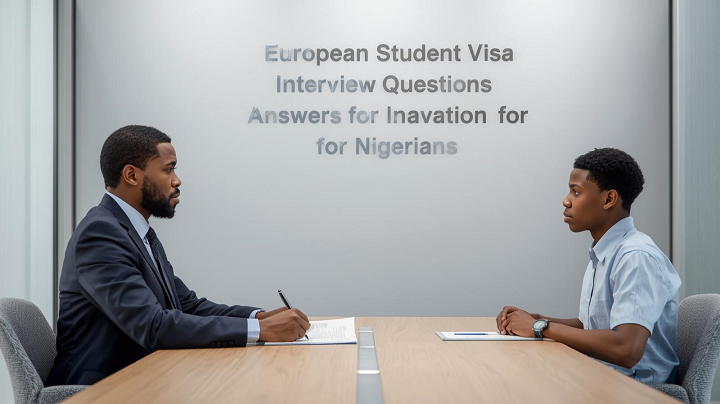
Country-by-Country Student Visa Interview Expectations in Europe
Many Nigerians wrongly assume that all European student visa interviews follow the same pattern. In reality, each country applies its own immigration philosophy, risk thresholds, and interview culture, even though they may operate under broader regional frameworks.
Understanding these country-by-country differences is critical. A response that works well for one embassy may be interpreted negatively by another. Nigerian applicants who fail to tailor their preparation often appear unconvincing, not because their intentions are wrong, but because their delivery does not match embassy expectations.
European visa interviews are not academic examinations. They are credibility assessments designed to measure intent, preparedness, and compliance likelihood.
Germany: Precision, Logic, and Documentation Mastery
Germany applies one of the most structured and documentation-driven interview styles in Europe.
German visa officers expect Nigerian applicants to demonstrate a deep understanding of their academic program, university structure, and study progression. Vague answers are poorly tolerated. Applicants must know their tuition structure, semester breakdown, and academic requirements in detail.
Financial discussions are particularly strict. Applicants must clearly explain how their funds are structured, how long they will last, and how they comply with German student residence regulations. Any uncertainty around funding can trigger refusal.
Germany places less emphasis on emotional storytelling and more on logical consistency. Nigerian applicants who exaggerate motivations or rely on generic aspirations often struggle.
Calm, factual, and direct communication performs best.
France: Academic Motivation and Cultural Integration
France places significant weight on academic motivation and cultural readiness.
During interviews, Nigerian applicants are expected to explain not only why they chose their course, but why they chose France specifically. Officers assess whether the applicant understands the French academic environment and lifestyle.
Financial questions are important, but France often focuses more on sustainability than sheer volume of funds. Applicants must show they can support themselves without relying excessively on work.
Language ability may be assessed informally, even for English-taught programs. Applicants who show openness to cultural integration and long-term academic seriousness tend to perform well.
Overemphasis on post-study work or migration prospects is discouraged.
Netherlands: Practicality and Career Alignment
The Netherlands adopts a pragmatic interview style.
Dutch visa officers evaluate whether the applicant’s study choice aligns logically with career plans. Nigerians must demonstrate that their program has clear professional value and that they understand how the Dutch education system operates.
Financial discussions focus on affordability and realism. Applicants must show that they can manage living costs without financial strain.
Dutch interviews are often conversational but precise. Applicants who answer clearly and concisely, without unnecessary embellishment, are viewed favorably.
Country-by-Country Student Visa Interview Expectations in Europe
Sweden: Independence and Personal Responsibility
Sweden places strong emphasis on student independence.
Visa officers expect Nigerian applicants to demonstrate maturity, self-planning ability, and financial autonomy. Heavy reliance on family sponsors without personal contribution or understanding can raise concerns.
Applicants must show awareness of Swedish academic culture, including self-directed learning and time management.
Sweden is less interview-intensive than some countries, but when interviews occur, they focus on personal responsibility and realistic planning rather than emotional narratives.
Finland: Clarity, Honesty, and Long-Term Thinking
Finland’s interview style is subtle but deeply analytical.
Nigerian applicants are assessed on clarity of purpose, honesty, and realistic long-term thinking. Officers are attentive to inconsistencies and vague explanations.
Financial plans must be precise. Finland expects applicants to understand their living costs and funding duration clearly.
Applicants who demonstrate calm confidence, academic seriousness, and respect for regulations tend to succeed.
Norway: Transparency and Academic Integrity
Norway values transparency and academic integrity.
Visa interviews often focus on why the applicant chose Norway despite limited job opportunities during study and strict compliance rules. Nigerians must demonstrate that their primary motivation is education, not employment.
Financial sufficiency is critical. Applicants must show they can sustain themselves fully without reliance on part-time work.
Honest answers, even when imperfect, are preferred over polished but unrealistic responses.
Italy: Intent Verification and Financial Justification
Italy conducts intent-focused interviews.
Visa officers assess whether the applicant understands the course structure and genuinely intends to study. Financial justification is important, particularly the source and legitimacy of funds.
Nigerian applicants should be prepared to explain academic gaps and course transitions clearly.
Italy places moderate emphasis on interview demeanor. Politeness and clarity matter.
Spain: Study Commitment and Resource Awareness
Spain focuses on study commitment and resource awareness.
Applicants must demonstrate knowledge of their program, institution, and living arrangements. Financial discussions examine whether the applicant can realistically support themselves without undue hardship.
Spain’s interviews are generally straightforward, but applicants who appear underprepared or financially uncertain face risks.
Poland and Eastern Europe: Consistency and Compliance
Countries in Eastern Europe focus heavily on consistency and compliance.
Nigerian applicants must ensure that their documents, interview answers, and academic history align perfectly. Any contradiction can result in refusal.
These countries often have lower tuition, which increases scrutiny regarding migration intent. Applicants must clearly articulate educational value rather than cost motivation.
Common Mistakes Nigerians Make Across Countries
A recurring error is using the same interview answers regardless of country. Another is assuming that friendliness equates to approval.
Applicants also underestimate the importance of silence, composure, and direct answers. Over-explaining often weakens credibility.
Professional Insight
Country-specific preparation significantly improves approval rates for Nigerians. Embassies reward applicants who respect their unique expectations and communicate accordingly.
Country-by-Country Student Visa Interview Expectations in Europe
United Kingdom: Credibility, Consistency, and Compliance Awareness
Although the United Kingdom is no longer part of the European Union, many Nigerians still group it mentally with Europe, and its student visa interview expectations remain highly relevant for comparative understanding.
UK student visa interviews for Nigerians are structured around credibility interviews. Officers focus on whether the applicant genuinely intends to study, understands their course, and can comply with immigration rules. The UK places strong emphasis on consistency between the application form, CAS details, financial evidence, and oral answers.
Applicants are expected to know their tuition fees, course duration, modules, and post-study conditions clearly. Any contradiction, even minor, can lead to refusal on credibility grounds. Unlike some European countries, emotional explanations carry little weight. Precision and accuracy dominate.
Overstating plans to remain in the UK permanently is a frequent refusal trigger.
Ireland: Academic Progression and Financial Sustainability
Ireland’s student visa interviews for Nigerians prioritize academic progression and financial sustainability.
Applicants must demonstrate that their chosen course represents a logical continuation of prior education or professional experience. Sudden discipline changes without justification often raise concerns.
Financial assessment in Ireland focuses on whether the applicant can maintain themselves without reliance on excessive employment. Officers are cautious of applicants who appear to be using education as a gateway to low-skilled work.
Ireland values structured answers that show planning, maturity, and realistic expectations.
Belgium: Academic Fit and Institutional Awareness
Belgium places emphasis on academic fit and institutional understanding.
Nigerian applicants must demonstrate that they understand the academic system, grading structure, and language of instruction. Interviews often assess whether the applicant chose Belgium intentionally or simply selected it due to perceived ease.
Financial explanations must be clear, particularly regarding sponsorship and living costs. Belgium’s interviews are usually calm but detail-oriented.
Applicants who show academic seriousness and research depth tend to succeed.
Austria: Study Logic and Long-Term Compliance
Austria’s student visa interviews for Nigerians focus on the logic behind the study plan and long-term compliance.
Officers assess whether the applicant understands the academic environment and whether the course aligns with previous education. Austria is sensitive to applicants who appear unsure about their plans.
Financial sufficiency must be demonstrated clearly, and applicants should understand residence permit conditions.
Answers should be concise, honest, and well-structured.
Portugal: Resource Management and Intent Clarity
Portugal conducts intent-driven interviews.
Applicants must show that they understand their course, institution, and accommodation arrangements. Financial discussions focus on realistic cost planning rather than large balances.
Portugal is attentive to whether applicants view the student visa as a pathway to irregular employment. Nigerians must emphasize academic commitment and lawful compliance.
Clear articulation and modest confidence are valued.
Czech Republic and Slovakia: Documentation Alignment and Academic Seriousness
These countries apply strict documentation alignment standards.
Nigerian applicants must ensure that interview answers match submitted documents exactly. Officers often verify details verbally to test consistency.
Academic seriousness is assessed through understanding of course content, duration, and institutional structure.
Any sign of guesswork weakens credibility.
Hungary: Cost Motivation vs Academic Purpose
Hungary attracts many Nigerians due to affordability, which increases scrutiny.
Visa officers frequently test whether the applicant’s motivation is cost-driven or academically grounded. Applicants must clearly articulate why the course is valuable beyond low tuition.
Financial proof must be well-documented, and applicants should not overemphasize affordability during interviews.
Hungary values clarity and modest confidence.
Lithuania, Latvia, and Estonia: Risk Sensitivity and Migration Intent Testing
Baltic states apply heightened scrutiny due to historical misuse of student routes.
Nigerian applicants should expect questions designed to test migration intent. Officers may ask about long-term plans, family ties, and career goals in detail.
Academic preparedness and financial independence must be clearly demonstrated.
Honesty and composure are critical.
Country-by-Country Student Visa Interview Expectations in Europe
Switzerland: Academic Excellence and Financial Strength
Switzerland applies one of the most selective approaches.
Nigerian applicants are assessed for academic excellence, financial strength, and clear study purpose. Interviews focus on whether the applicant can realistically thrive in a demanding academic environment.
Financial sufficiency must be unquestionable. Applicants relying on uncertain funding often struggle.
Switzerland rewards clarity, seriousness, and restraint.
Cross-Country Interview Patterns Nigerians Must Master
Despite differences, certain expectations are consistent across Europe.
Applicants must:
-
Understand their course deeply
-
Know their finances precisely
-
Communicate honestly
-
Avoid exaggeration
-
Maintain calm professionalism
Failure in one area can overshadow strengths in others.
Strategic Preparation Model for Nigerians
Effective preparation involves country-specific research, document mastery, and mental readiness.
Applicants should practice explaining their study plan in clear, logical language without memorization. Understanding why each document exists improves confidence.
Preparation is not about rehearsing answers; it is about internalizing the story behind the application.
Final Professional Conclusion
European student visa interviews are not obstacles designed to exclude Nigerians. They are filters designed to admit credible students who can succeed academically and comply legally.
Nigerians who understand country-specific expectations, communicate with clarity, and respect embassy logic consistently achieve approvals.